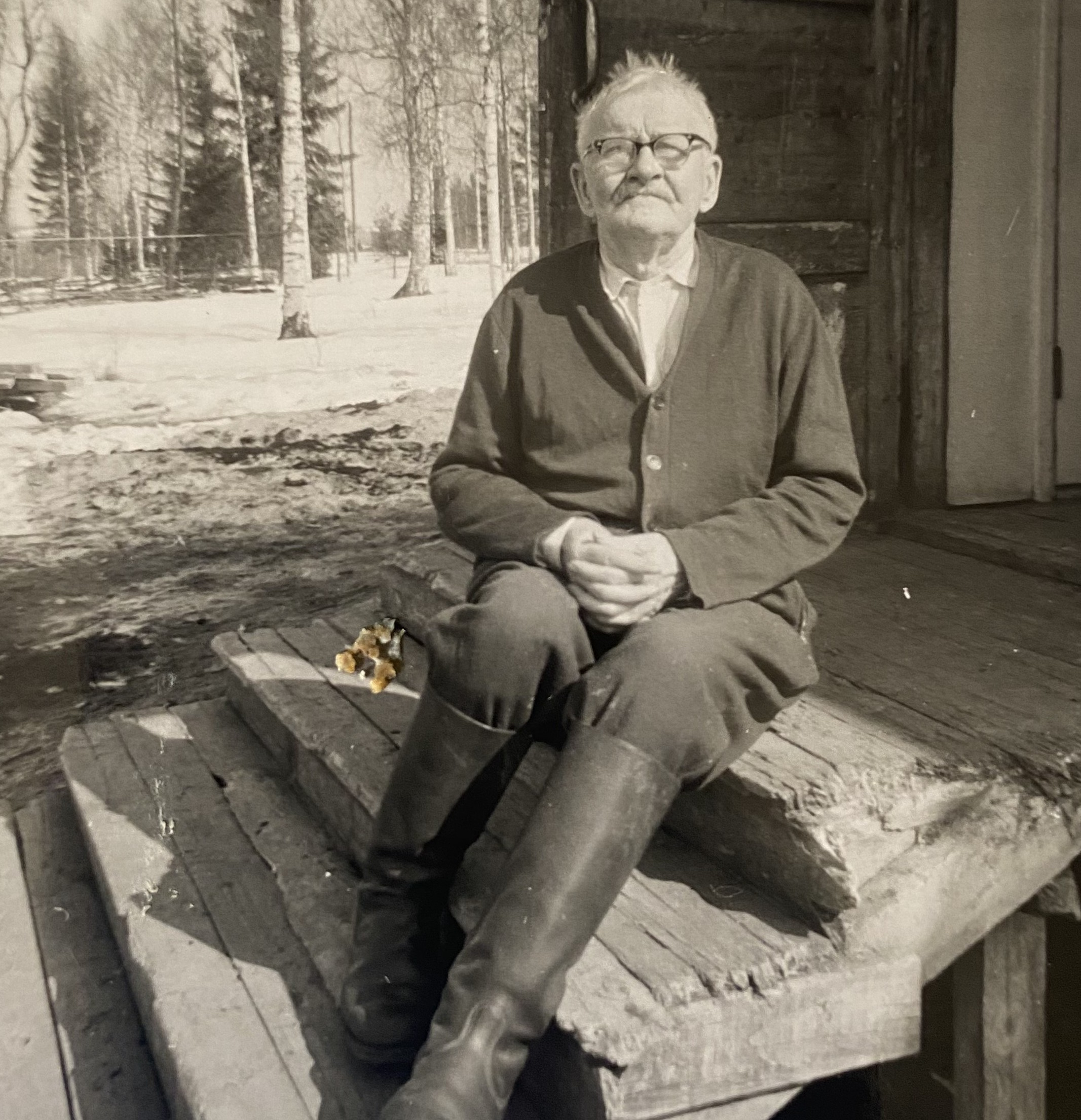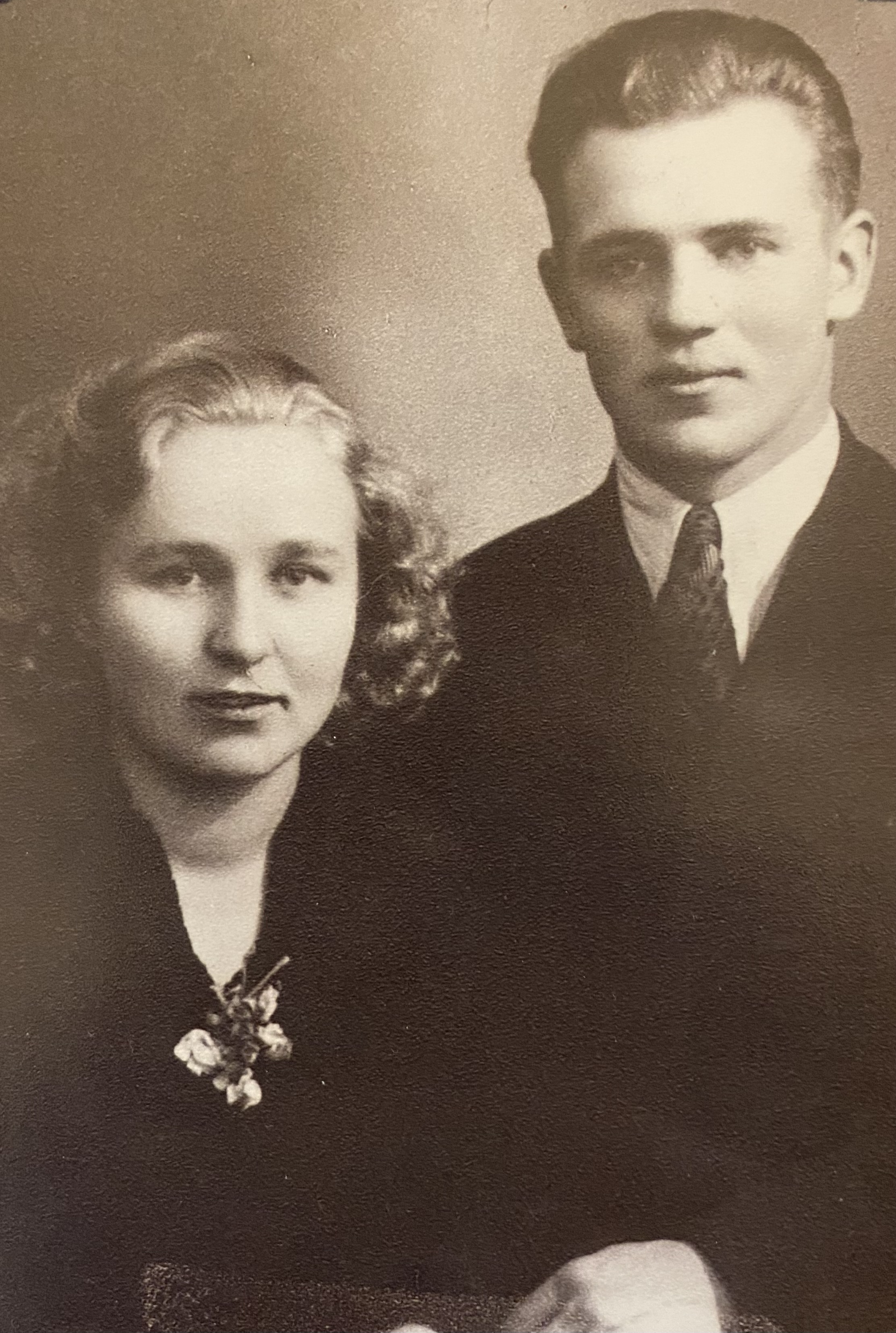
Book on the history of Kaustajärvi
My grandmother grew up in a small village near the Russian border called Kaustajärvi. It is located in the North Karelia region of eastern Finland and it is known for its forests and lakeside scenery.
I have visited the area a few times on my trips to Finland and I went to the place where the original home my grandmother lived in was located. There is nothing there now, but I was told about the house, the sauna across the street and that there was a local store close by. I have also been to the grave of my great grandparents Antti and Ida Hämäläinen in Kaustajärvi.
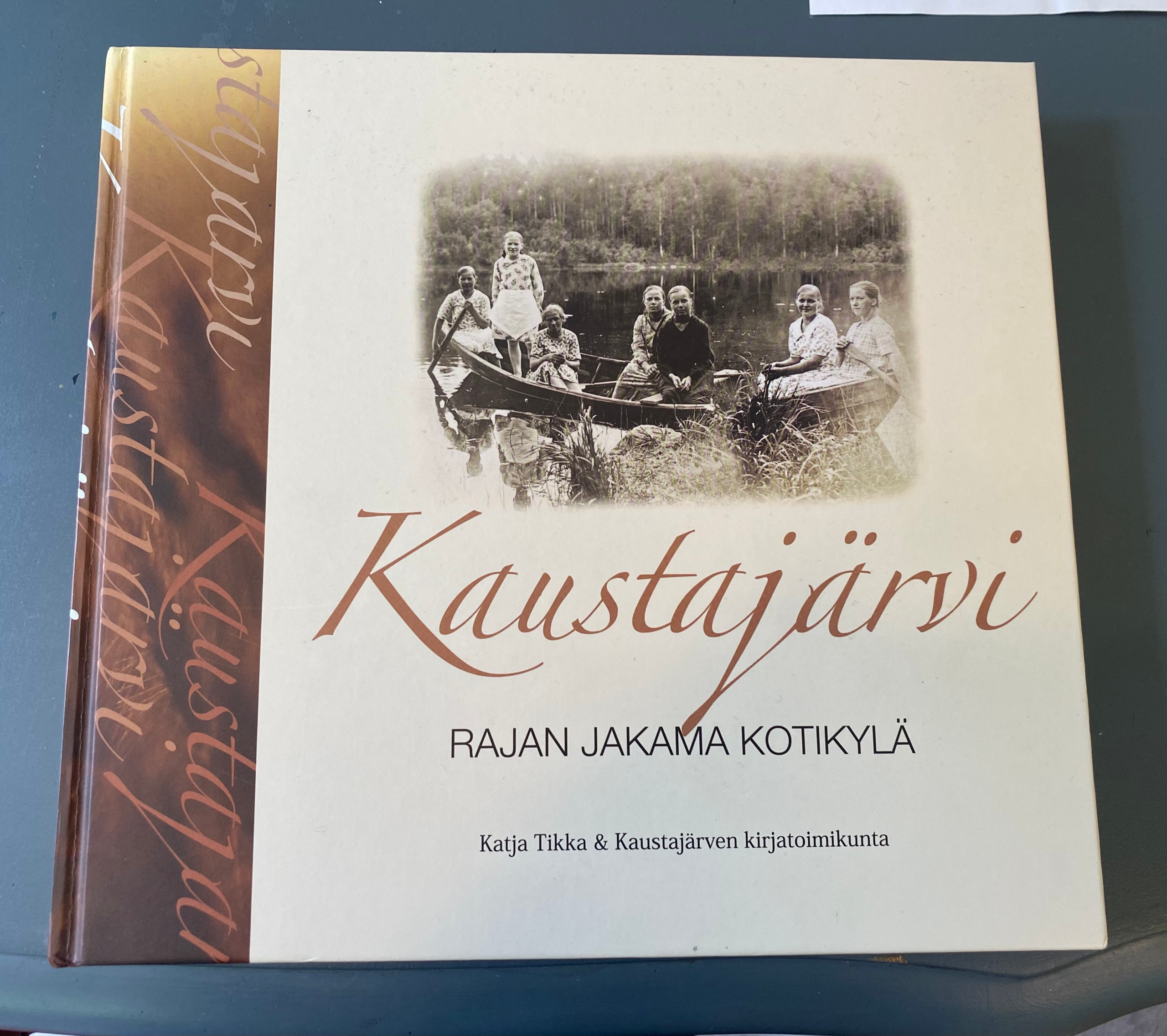
My mom's cousin sent her the book in the photos below that outlines the history of Kaustajärvi and the people that lived there.
I try to imagine what life must have been like at that time. The winters must have been very harsh, with no running water and no electricity. Most rural homes in eastern Finland did not yet have electricity in the 1920s. Lighting would have come from oil lamps, candles, or kerosene, and heating and cooking relied on wood-burning stoves. One might say it was probably quite difficult in a lot of ways without the comforts of modern technology. I think they were also richer in ways than we would never understand, placing high value on family and the community around them.
During the different seasons people would have spent their time picking berries and mushrooms, fishing on the lake, swimming, or cross-country skiing once the snow came. Family and neighbors would also have been very important, with people dropping by for a visit and going to the sauna together, and during long winter nights people would have gathered together to read, play instruments, sing songs, and pass the time telling stories to each other.
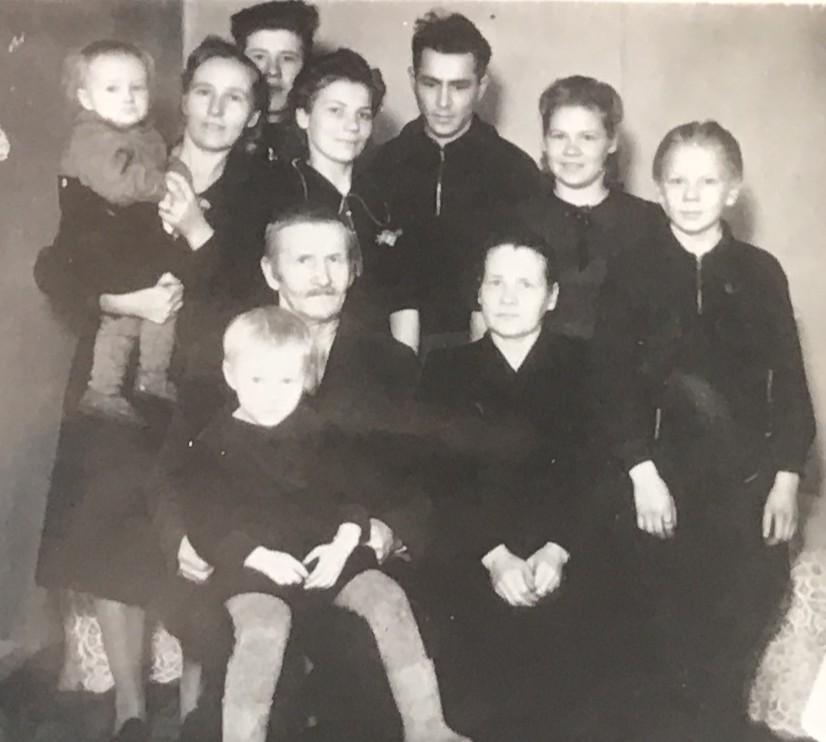
Antti, Ida, Alpo, Aili,
Alma, Aatos, Aimo, Veijo,
Lyydia, and Airi
My mom's cousin Pertti Niiranen shared this memory of my great grandfather Antti Hämäläinen:
Sitting on the edge of the bed in his modest room, with his hands folded, he prayed aloud for a long time, remembering us too. On the table in front of him, I saw an open hymnbook, several devotional books, and Awake and Watch magazines. I wondered if that was where he drew his faith. Then he dug out the reed horn he had just made and complained that he could no longer find good-quality reed. Our meeting already felt like a farewell to me.
Less than two years later, a message of condolence arrived and an invitation to Grandpa's funeral at the end of May 1968. Veijo and I traveled from Helsinki to attend the funeral at Kaustajärvi Cemetery. My grandfather was laid to rest in the grave next to Grandma Ida at the age of almost 87. The weather in Karelia on the day of the funeral was cold, but warm, dear, and precious memories of my grandparents Antti and Ida Hämäläinen remained in my heart.
Years passed. Grandpa and Grandma's house and the yard buildings fell into disrepair, decayed, and collapsed. Only the barn remained. Finally, the time came to divide the inheritance. Airi, Veijo, and I were left together with the yard of the house and a narrow strip of land that extends to the bank of the Heinäjoki River on the other side of the bridge. We want to dedicate our inheritance to the memory of Grandpa Antti, Grandma Ida, and our father Arvo. In the yard trees, birds can sing for Finnish freedom in the spring, and the Karelian cuckoo can roost in the forest. And perhaps some clever-fingered person will someday get some good birch bark to craft new bast shoes, berry baskets, fish bags, or shepherd's horns.